Stephen Colbert
Comedian and host of satirical news and late-night shows.

Stephen Tyrone Colbert (born May 13, 1964) is an American comedian, writer, producer, political commentator, actor, and television host. He is best known for hosting the Comedy Central news satire show The Colbert Report from 2005 to 2014, and the CBS late-night talk show The Late Show with Stephen Colbert from 2015 to present. Born into a Catholic family in Washington, D.C. and raised in South Carolina, Colbert originally studied to be a dramatic actor, but became interested in improvisational theater while attending Northwestern University. He first performed professionally as an understudy for Steve Carell at Second City's e.t.c. theater, and later worked with Paul Dinello and Amy Sedaris on the sketch series Exit 57. Colbert's work as a correspondent on Comedy Central's The Daily Show gained him wide recognition before he left in 2005 to host The Colbert Report, a parody of personality-driven political opinion shows in which he portrayed a caricatured version of conservative political pundits.
- born
- May 13, 1964
- field
- Comedy, television, political satire
- nationality
- American
- known_for
- Hosting The Colbert Report and The Late Show with Stephen Colbert
Verified Timeline
Lore & Background
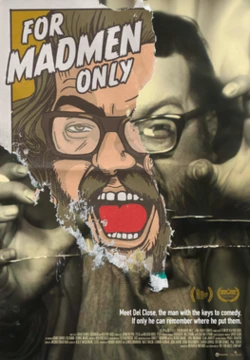
Stephen Colbert was born in Washington, D.C., the youngest of eleven children in a Catholic family, and grew up in James Island, South Carolina. His father, James William Colbert Jr., was an immunologist and medical school dean; his mother, Lorna Elizabeth Colbert, was a homemaker. On September 11, 1974, when Colbert was ten, his father and his brothers Paul and Peter died in the crash of Eastern Air Lines Flight 212 while attempting to land in Charlotte, North Carolina. After the tragedy, his mother moved the family to downtown Charleston and ran the carriage house as a bed and breakfast. Colbert attended Porter-Gaud School, an Episcopal school in Charleston, then studied philosophy at Hampden–Sydney College before transferring in 1984 to Northwestern University as a theater major. At Northwestern, he was in an improv group with David Schwimmer called the No Fun Mud Piranhas. He graduated from Northwestern's School of Communication in 1986. After graduating, Colbert met Second City director Del Close while performing at Second City Chicago. He first performed professionally as an understudy for Steve Carell at Second City's e.t.c. theater, where he met Amy Sedaris and Paul Dinello. He performed on and wrote for The Dana Carvey Show (1996), and collaborated again with Sedaris and Dinello on the sitcom Strangers with Candy (1999–2000). His work as a correspondent on Comedy Central's The Daily Show gained him wide recognition. In 2005, he left to host The Colbert Report, a parody of personality-driven political opinion shows including The O'Reilly Factor, in which he portrayed a caricatured version of conservative political pundits. In the first episode, he introduced the neologism truthiness, which was named Word of the Year by the American Dialect Society and Merriam Webster. In 2006, he performed as featured entertainer at the White House Correspondents' Association Dinner in character. In 2010, he and Jon Stewart headlined the Rally to Restore Sanity and/or Fear. In 2011, he started the satirical Colbert Super PAC. After ending The Colbert Report, he was hired in 2015 to succeed David Letterman as host of the Late Show on CBS. He hosted the 69th Primetime Emmy Awards in September 2017.
Reader's Guide
Stephen Colbert's significance lies in his pioneering blend of satire, political commentary, and character-driven comedy. Through The Colbert Report, he created a sustained parody of conservative punditry that both entertained and informed audiences about media bias and political rhetoric. The show's success, including its influence on campaign finance awareness through the Colbert Super PAC, demonstrated how comedy could engage with serious civic issues. His transition to The Late Show with Stephen Colbert marked a shift from character to himself, allowing him to reach a broader audience while maintaining a satirical edge. Colbert's work has earned him eleven Primetime Emmy Awards, two Grammy Awards, and three Peabody Awards, and he was named one of Time's 100 Most Influential People in 2006 and 2012. His legacy includes the popularization of the term truthiness and a model for how late-night television can serve as a platform for political and cultural critique.
Did You Know?
- Colbert introduced the neologism 'truthiness' in the first episode of The Colbert Report, which was named Word of the Year by both the American Dialect Society and Merriam Webster.
- On September 11, 1974, when Colbert was ten, his father and two brothers died in the crash of Eastern Air Lines Flight 212 near Charlotte, North Carolina.
- Colbert started using the pronunciation kohl-BAIR later in life when he transferred to Northwestern University, taking advantage of the opportunity to reinvent himself in a new place where no one knew him.
- At age 21, Colbert auditioned and was accepted for the graduate drama program at New York University, but declined to act in Chicago.
- Colbert's book I Am America (And So Can You!) was listed No. 1 on The New York Times Best Seller list in 2007.
Roots, Loss, and Reinvention
Born the youngest of eleven children in a Catholic household in Washington, D.C. on May 13, 1964, Stephen Colbert grew up on James Island, a suburb of Charleston, South Carolina. His father, James William Colbert Jr., was an immunologist and medical school dean at Yale University, Saint Louis University, and the Medical University of South Carolina; his mother, Lorna Elizabeth Colbert, was a homemaker. Colbert has described his parents as devout people who valued intellectualism and taught that one could question the Church and still be Catholic. He recalls having a 'pretty conservative upbringing,' with his mother voting for a Democrat exactly once—John F. Kennedy. As a child, he taught himself to imitate the speech of news anchor John Chancellor to avoid the stereotype of Southerners as less intelligent. A defining wound arrived on September 11, 1974, when Colbert was ten: his father and his brothers Paul and Peter died in the crash of Eastern Air Lines Flight 212 near Charlotte, North Carolina. His mother relocated the family to downtown Charleston, where she ran a bed-and-breakfast from the George Chisolm House. Colbert recalled shutting down emotionally, finding refuge in Tolkien novels and Dungeons & Dragons sessions that he later characterized as early experience in acting and improvisation. He attended Porter-Gaud School, an Episcopal school in Charleston, then studied philosophy at Hampden–Sydney College before transferring in 1984 to Northwestern University as a theater major. At Northwestern, he was in an improv group with David Schwimmer called the No Fun Mud Piranhas. He also quietly reinvented his surname's pronunciation at Northwestern, shifting from the family's traditional KOHL-bert to the French-influenced kohl-BAIR.
From Improv Stage to Late-Night Throne
Originally trained as a dramatic actor, Colbert discovered improvisational theater at Northwestern University, where he encountered Second City director Del Close and performed in the No Fun Mud Piranhas improv group. After graduating in 1986, he needed a job and accepted a position answering phones and selling souvenirs at Second City's box office, where employees could take free classes. Despite earlier aversion to the comedy group, he signed up for improvisation classes and enjoyed the experience greatly. His first professional gig was as an understudy for Steve Carell at Second City Chicago, a position that placed him alongside future collaborators Paul Dinello and Amy Sedaris—who initially thought Colbert was uptight, pretentious, and cold, while Colbert thought Dinello was 'an illiterate thug,' but the trio became close friends while touring together. After performing and writing on The Dana Carvey Show in 1996, he reunited with Sedaris and Dinello for the sitcom Strangers with Candy (1999–2000). The breakthrough came when he joined Comedy Central's The Daily Show as a correspondent, a role that gave him national visibility. In 2005 he departed to launch The Colbert Report, a weekly satire that mocked personality-driven political commentary shows including The O'Reilly Factor. Nine years later, in 2015, CBS tapped him to take over the Late Show from a retiring David Letterman, a position he held through 2026. The arc from a small Chicago improv troupe to one of television's most prominent late-night chairs spans roughly two decades of relentless comedic evolution.
Satire as Cultural Weapon
The Colbert Report's genius lay in its precision targeting: Colbert constructed a bloated, self-aggrandizing caricature of the conservative political pundit, specifically echoing the format of programs like The O'Reilly Factor. In the very first episode he coined the word 'truthiness,' a term the American Dialect Society and Merriam Webster both later crowned Word of the Year. That single neologism became a shorthand in political discourse for years. His satirical reach extended well beyond the studio: in 2006 he performed as his on-air persona at the White House Correspondents' Association Dinner, an appearance that helped propel the series to become one of Comedy Central's highest-rated shows. In 2010, alongside Jon Stewart, he headlined the Rally to Restore Sanity and/or Fear, a massive political comedy event. The following year he launched the fictitious Colbert Super PAC, a satirical campaign-finance vehicle that was credited with raising awareness of campaign finance issues. Each of these moments blurred the line between entertainment and civic commentary, forcing audiences to confront the machinery of media they consumed daily.
Awards, Influence, and Lasting Footprint
By the time his career wound down, Colbert had accumulated an extraordinary shelf of honors: eleven Primetime Emmy Awards, two Grammy Awards, and three Peabody Awards—a combination that places him among the most decorated figures in television history. In September 2017 he hosted the 69th Primetime Emmy Awards ceremony, a role that underscored his standing within the industry. His cultural influence was recognized beyond the awards circuit as well: Time magazine named him to its 100 Most Influential People list twice, in 2006 and again in 2012. His 2007 book I Am America (And So Can You!) was listed No. 1 on The New York Times Best Seller list, demonstrating that his comedic voice resonated with readers far beyond the television audience. The breadth of his recognition—spanning comedy, journalism, political satire, and literature—reflects a career that consistently operated at the intersection of entertainment and public discourse, leaving a mark on how Americans process political media and how late-night television can function as both a mirror and a critique of the news cycle.
More in Comedians And Comic Actors 1-24
Spotted an error? Know more?
This is a living reference — every entry is fact-audited, and reader corrections feed straight into our audit queue. Suggest an edit · See this site's audit record